📩 info@irisprotectionservices.com 📲 (657) 214-0877 🏛️ Iris Protection Services, Inc 🛂 License No. PPO120833
Uniformed vs. Plainclothes Security Guards: Which Is Right for Your Business?
Security is not a one-size-fits-all solution. While many businesses immediately picture a uniformed security guard standing at an entrance, there are situations where a plainclothes security guard may be the more effective choice. Each approach serves a different purpose, and selecting the right option depends on your property’s risks, operational goals, and customer environment.
Whether you operate a retail store, office building, hotel, warehouse, healthcare facility, or event venue, understanding the differences between uniformed and plainclothes security guards can help you make an informed decision.
This guide explains how each type of security guard works, their advantages, potential limitations, and the types of businesses that benefit most from each approach.
Understanding the Difference
The primary distinction between uniformed and plainclothes security guards is visibility.
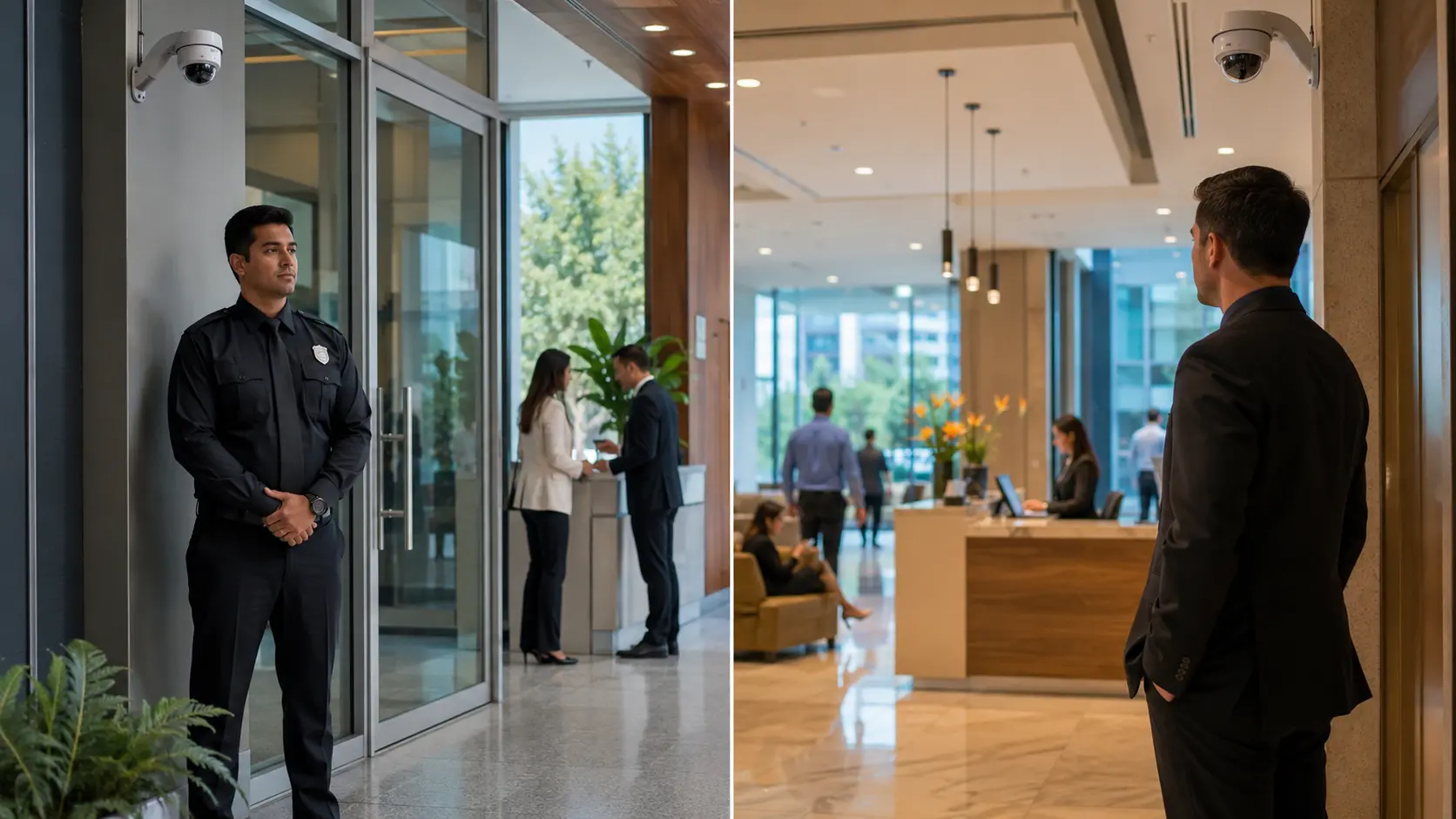
Uniformed security guards wear clearly identifiable security uniforms that make their role immediately recognizable to employees, visitors, and the public.
Plainclothes security guards dress in everyday business or casual attire, allowing them to blend into the surrounding environment while discreetly observing activities.
Although their appearance differs, both types of security personnel perform many of the same core responsibilities, including monitoring for suspicious activity, protecting property, documenting incidents, and responding according to established procedures.
What Are Uniformed Security Guards?
Uniformed security guards are the most recognizable form of private security. Their visible presence serves as an immediate reminder that a property is actively monitored.
Typical duties include:
- Controlling access points
- Conducting interior and exterior patrols
- Monitoring surveillance systems
- Assisting visitors
- Responding to alarms
- Reporting suspicious activity
- Supporting emergency evacuations
- Writing daily activity and incident reports
Because they are easily identifiable, uniformed guards often become the first point of contact during emergencies or when visitors need assistance.
Advantages of Uniformed Security Guards
Strong Visual Deterrence
One of the greatest benefits of a uniformed guard is deterrence. Individuals considering theft, vandalism, or unauthorized access are less likely to target a property where security personnel are clearly visible.
Easy Identification
Employees, visitors, contractors, and emergency responders can quickly recognize who to approach for assistance.
Faster Emergency Response
During emergencies, a clearly identifiable guard can coordinate evacuations, provide directions, and communicate with first responders more efficiently.
Professional Presence
Uniformed security projects an image of preparedness and organization, helping reassure employees, customers, and visitors that safety is a priority.
Improved Access Control
Uniformed guards are well suited for entrance checkpoints, reception areas, parking facilities, and visitor screening locations where their authority should be immediately recognized.
Potential Limitations of Uniformed Security
While highly effective in many situations, visible security may not always be the ideal solution.
Potential limitations include:
- Individuals with criminal intent may avoid monitored areas and move elsewhere.
- Visible patrol patterns can sometimes become predictable if not properly managed.
- A highly visible presence may not be appropriate for luxury retail, executive environments, or investigations requiring discretion.
These factors do not reduce the value of uniformed security but highlight the importance of matching the security strategy to the environment.
What Are Plainclothes Security Guards?
Plainclothes security guards perform many of the same protective duties as uniformed officers but do so while blending into the environment.
Instead of wearing traditional security uniforms, they may dress as shoppers, office employees, hotel guests, or event attendees, depending on the assignment.
Their unobtrusive appearance allows them to observe behavior without immediately drawing attention.
Advantages of Plainclothes Security Guards
Discreet Observation
Because they are not easily recognized, plainclothes officers can monitor activities more naturally and identify suspicious behavior that might otherwise go unnoticed.
Better Detection of Theft
Retail businesses often use plainclothes personnel to observe suspected shoplifting or organized retail crime without influencing customer behavior.
Reduced Public Attention
Some businesses prefer security that does not create an overly visible enforcement presence while still maintaining safety.
Enhanced Investigative Support
Plainclothes guards can assist with internal theft investigations, employee misconduct concerns, policy violations, or recurring security issues where discretion is important.
Improved Customer Experience
Luxury hotels, upscale retailers, executive offices, and premium venues may prefer discreet security that maintains a welcoming atmosphere without appearing intimidating.
Potential Limitations of Plainclothes Security
Although plainclothes security offers several advantages, it may not be appropriate for every situation.
Potential limitations include:
- Reduced visual deterrence
- Visitors may not know who to approach during emergencies
- Identification may take longer during rapidly evolving situations
- Limited value where visible access control is required
For many organizations, these limitations can be addressed by combining plainclothes personnel with visible security staff.
Uniformed vs. Plainclothes Security Guards: A Comparison
| Feature | Uniformed Security Guards | Plainclothes Security Guards |
|---|---|---|
| Visibility | Highly visible | Discreet and blends into surroundings |
| Crime Deterrence | Strong visual deterrent | Limited visual deterrence |
| Observation | Open monitoring | Covert observation |
| Customer Recognition | Easy to identify | Often unrecognized until needed |
| Access Control | Excellent | Limited |
| Retail Theft Detection | Good | Excellent |
| Emergency Coordination | Highly effective | Effective after identification |
| Public Interaction | Frequent | Usually limited |
| Best For | Offices, hospitals, warehouses, construction sites, residential communities | Retail, luxury hospitality, investigations, executive environments |
Which Businesses Benefit Most from Uniformed Security?
Uniformed guards are often the preferred choice for organizations that want a visible security presence.
Examples include:
- Office buildings
- Corporate campuses
- Hospitals
- Healthcare facilities
- Warehouses
- Manufacturing plants
- Construction sites
- Apartment communities
- Schools
- Government facilities
- Distribution centers
- Parking structures
These environments often benefit from immediate recognition, visible patrols, and active access control.
Which Businesses Benefit Most from Plainclothes Security?
Plainclothes security is commonly used where discreet monitoring is more valuable than a visible deterrent.
Examples include:
- Retail stores
- Shopping malls
- Luxury boutiques
- Hotels
- Resorts
- Corporate investigations
- Entertainment venues
- Museums
- Casinos
- Executive offices
- Special events
- High-end residential properties
In these settings, discreet observation helps maintain a positive customer experience while supporting security objectives.
Can Businesses Use Both?
Absolutely. Many organizations achieve the best results by combining uniformed and plainclothes security personnel.
For example:
- A shopping mall may use uniformed guards at entrances while plainclothes officers monitor retail areas.
- A hotel may station uniformed security in the lobby while deploying plainclothes officers during large conferences or private events.
- A corporate headquarters may assign uniformed guards to reception areas while using plainclothes personnel for internal investigations or executive support.
A layered security approach provides both visible deterrence and discreet observation, creating a more comprehensive security program.
Factors to Consider When Choosing
Before selecting a security solution, consider the following questions:
- What are your primary security concerns?
- Is visible crime deterrence a priority?
- Does your property require strict access control?
- Will security personnel interact frequently with customers or visitors?
- Are you concerned about theft, fraud, or internal losses?
- Would discreet observation improve security outcomes?
- Are there industry-specific regulations or insurance requirements?
A professional security assessment can help identify the most appropriate approach for your facility.
Frequently Asked Questions
Are plainclothes security guards licensed?
Licensing requirements vary by jurisdiction, but professional plainclothes security personnel are generally subject to the same licensing, training, and regulatory requirements as other private security guards.
Which type of security guard deters crime more effectively?
Uniformed security guards typically provide stronger visible deterrence because their presence is immediately recognizable. Plainclothes guards are more effective when discreet observation and intelligence gathering are priorities.
Can plainclothes security guards respond to emergencies?
Yes. Plainclothes security personnel are trained to respond according to established procedures. During an emergency, they identify themselves, coordinate with other security staff, and assist emergency responders as needed.
Is plainclothes security only used in retail?
No. While retail environments frequently use plainclothes officers, they are also employed in hotels, executive protection, corporate investigations, entertainment venues, healthcare facilities, and other locations where discretion is important.
Can a business combine both security approaches?
Yes. Many organizations use both uniformed and plainclothes personnel to create a layered security strategy that balances visible deterrence with discreet monitoring.
Conclusion
Both uniformed and plainclothes security guards play valuable roles in protecting businesses, employees, customers, and property. The right choice depends on your organization’s specific security objectives, operational environment, and level of risk.
Uniformed security guards provide a highly visible presence that helps deter criminal activity, control access, and reassure employees and visitors. Plainclothes security guards offer discreet observation, making them particularly effective in environments where subtle monitoring, theft detection, or confidential investigations are important.
For many businesses, the most effective solution is not choosing one over the other but integrating both into a comprehensive security strategy. By combining visible deterrence with discreet surveillance, organizations can create a balanced approach that addresses a wide range of security challenges while supporting safe and efficient daily operations.