📩 info@irisprotectionservices.com 📲 (657) 214-0877 🏛️ Iris Protection Services, Inc 🛂 License No. PPO120833
Security Guard Training
Professional security begins with professional training. At Work Force Security Services, we are committed to preparing security officers with the knowledge, judgment, and practical skills required to perform their responsibilities with confidence and professionalism. Our training programs are designed to satisfy California’s regulatory requirements while helping officers develop the communication, observation, and decision-making abilities needed in today’s security industry.
Whether you are pursuing your first California Guard Card or expanding your qualifications with additional certifications, our programs provide comprehensive instruction that supports both compliance and long-term career development.
Learn From Experienced Professionals
Our instructors combine industry knowledge with practical field experience to deliver training that reflects the realities of modern security work. Classroom instruction is supported by practical exercises and scenario-based learning to strengthen decision-making and professional confidence.
California BSIS Training Requirements
Security officers employed in California must complete the training standards established by the California Bureau of Security and Investigative Services (BSIS). These requirements ensure that licensed security professionals understand their legal responsibilities, ethical obligations, and operational procedures before and throughout their employment.
Our curriculum follows these state-mandated training requirements and provides practical instruction that prepares officers for a variety of real-world assignments.
Initial Guard Card Training (40 Hours)
California requires new security officers to complete a total of 40 hours of BSIS training during the beginning stages of their employment.
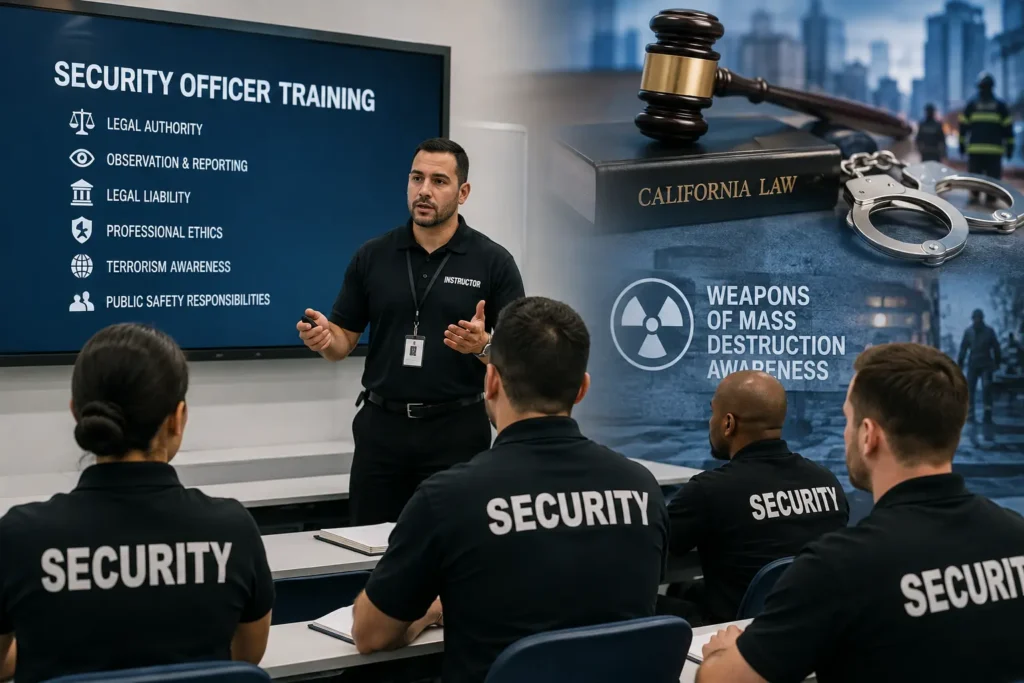
Power to Arrest & Weapons of Mass Destruction (8 Hours)
Before beginning security duties, every prospective security officer must complete the required Power to Arrest and Weapons of Mass Destruction Awareness course.
Training topics include:
- Authority and limitations of security officers
- Legal detention procedures
- Civil and criminal liability
- Professional ethics
- Observation and reporting
- Terrorism awareness
- Public safety responsibilities
This foundational course establishes the legal framework every licensed security officer must understand before entering the profession.
Mandatory Skills Training (16 Hours)
The next phase of instruction must be completed within the first 30 days of employment and focuses on the practical responsibilities security officers encounter during daily operations.
Course topics include:
- Professional communication
- Public relations
- Patrol techniques
- Observation skills
- Report writing
- Emergency response procedures
- Access control
- Customer service
These subjects help officers build the professional skills necessary for effective security operations.
Elective Skills Training (16 Hours)
The remaining training hours are completed within six months of employment and allow officers to broaden their operational knowledge through additional approved instruction.
Subjects may include:
- Conflict management
- Crowd control
- Workplace violence awareness
- Property protection
- Alarm response
- Vehicle patrol
- Incident documentation
- Professional conduct
Less-Lethal Certification Programs
Certain security assignments require additional training beyond the standard Guard Card curriculum. We offer instruction covering approved less-lethal defensive equipment to help officers expand their professional qualifications while understanding California’s legal and operational requirements.
Baton Permit Training
This course covers:
- Defensive baton techniques
- Safe handling practices
- Appropriate use-of-force considerations
- California legal standards
- Officer safety
- Practical application exercises
Pepper Spray Certification
Students learn:
- Chemical agent regulations
- Safe deployment procedures
- Environmental and safety considerations
- Post-exposure care
- Documentation requirements
- Responsible use
Electronic Control Device (ECD) Training
This specialized program introduces officers to:
- Safe equipment operation
- Deployment considerations
- Target assessment
- Legal responsibilities
- Medical awareness
- Ethical decision-making
Annual Continuing Education
Professional development does not end after obtaining a Guard Card. California requires licensed security officers to complete annual continuing education to remain informed about current regulations and industry best practices.
Continuing education courses reinforce essential topics such as:
- Changes to California regulations
- Officer safety
- Threat recognition
- Emergency procedures
- Report writing
- Customer interaction
- Professional ethics
- Situational awareness
Regular refresher training helps security officers maintain the knowledge and confidence necessary to perform their duties effectively.