📩 info@irisprotectionservices.com 📲 (657) 214-0877 🏛️ Iris Protection Services, Inc 🛂 License No. PPO120833
California Use-of-Force Guidelines for Security Guards: What Businesses Should Know
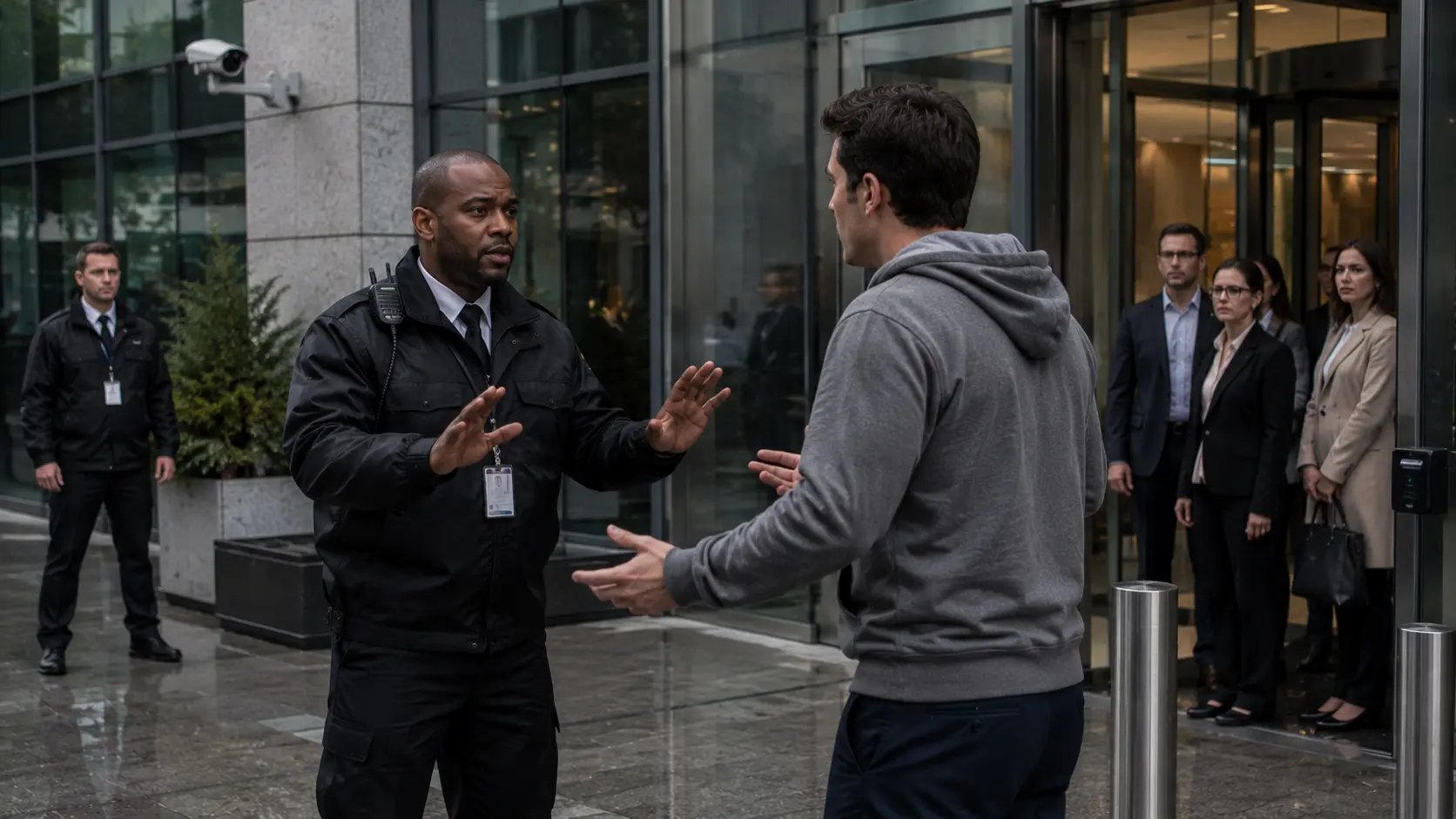
Private security guards are often the first to respond when a disturbance, trespassing incident, or emergency occurs on a property. While they play an important role in protecting people and assets, security guards in California must operate within clearly defined legal and professional boundaries when using force.
Contrary to common misconceptions, security guards do not have the same authority as law enforcement officers. Their actions are governed by California law, employer policies, and the training standards established by the Bureau of Security and Investigative Services (BSIS). Modern BSIS training places significant emphasis on de-escalation, communication, objective decision-making, and using force only when it is legally justified and reasonably necessary.
This guide explains the basic principles behind California’s use-of-force expectations for private security personnel and what businesses should understand when hiring security services.
What Is “Use of Force”?
In a security context, use of force refers to physical actions taken to protect people, defend property, prevent certain unlawful acts, or lawfully restrain an individual when authorized under applicable law.
Force exists on a spectrum. Many security situations are resolved without any physical contact.
Professional security personnel are trained to begin with the lowest level of intervention appropriate for the circumstances and to escalate only if necessary and legally justified.
California’s Approach to Use of Force
California’s BSIS training does not teach security guards to rely on force as a primary solution. Instead, the required curriculum emphasizes:
- Legal standards governing force
- Objectively reasonable decision-making
- De-escalation techniques
- Communication skills
- Conflict management
- Duty to intercede
- Incident reporting
- Recognition of individuals experiencing behavioral health crises
- Cultural competency and bias awareness
- Scenario-based decision-making
The overall objective is to reduce the likelihood that situations escalate into physical confrontations whenever it is safe to do so.
De-escalation Comes First
One of the most important principles in California security training is de-escalation.
Whenever circumstances allow, guards are expected to attempt to calm situations before they become physical.
Common de-escalation techniques include:
- Remaining calm and professional
- Speaking respectfully
- Listening actively
- Giving clear instructions
- Creating time and distance
- Maintaining situational awareness
- Calling for additional assistance
- Avoiding unnecessary confrontation
BSIS specifically includes de-escalation, interpersonal communication, and tactical concepts such as using time, distance, cover, and concealment to reduce the likelihood of violence.
The Principle of Objective Reasonableness
California’s BSIS curriculum teaches the concept of objectively reasonable force.
This means that if force becomes necessary, the response should be based on what a reasonable security professional would consider appropriate under the same circumstances—not on emotion, anger, or hindsight. The training also examines force options, restraint techniques, and real-life scenarios to reinforce sound decision-making.
Factors that may influence decisions include:
- Immediate threat level
- Subject behavior
- Potential danger to others
- Ability to safely withdraw
- Availability of less forceful alternatives
- Safety of employees, customers, and bystanders
Every situation is unique, and professional judgment is critical.
Security Guards Are Not Police Officers
One of the most common misconceptions is that private security guards possess the same enforcement powers as police officers.
They do not.
Security guards generally work on behalf of private property owners or organizations. Their authority is typically limited to responsibilities such as:
- Monitoring private property
- Enforcing site policies
- Observing and reporting incidents
- Controlling access
- Requesting that unauthorized individuals leave private property
- Contacting law enforcement when appropriate
- Assisting during emergencies
Understanding these limitations helps businesses establish realistic expectations regarding the role of private security.
When Might Force Become Necessary?
Although most security interactions are resolved verbally, situations occasionally arise where physical intervention may become necessary.
Examples may include:
- Defending oneself from an immediate attack
- Protecting another person from imminent harm
- Preventing violence
- Protecting property under circumstances recognized by law
- Making or maintaining a lawful citizen’s arrest where legally justified
The BSIS training manual explains that private security professionals may use force reasonably believed to be necessary to defend themselves or others, protect an employer’s property, or make or maintain a lawful citizen’s arrest. Any force used must be reasonable and not excessive.
Whether force is legally justified depends on the specific facts of each incident.
Duty to Intercede
California’s updated BSIS curriculum includes training on the duty to intercede.
In general terms, security personnel are expected to take appropriate action if they observe another security professional using force that appears improper or unnecessary, consistent with their training, employer policies, and the circumstances.
This reinforces accountability and encourages professionalism throughout the security industry.
Incident Reporting Is Essential
Whenever force is used, accurate documentation becomes especially important.
Security personnel are typically expected to document:
- Date and time
- Location
- Individuals involved
- Events leading to the incident
- Observed behavior
- Actions taken
- Witness information
- Notifications made
- Any injuries or property damage
Complete and objective reports help clients understand what occurred and may support internal reviews, insurance claims, or law enforcement investigations.
Specialized Training for High-Risk Situations
California’s required use-of-force curriculum extends beyond physical techniques.
Training includes topics such as:
- Active shooter awareness
- Behavioral health crisis response
- Interacting respectfully with individuals with disabilities
- Implicit and explicit bias
- Cultural competency
- Force decision-making exercises
- Realistic scenario training
The goal is to prepare security personnel for complex situations while reducing unnecessary uses of force whenever possible.
How Businesses Benefit from Proper Use-of-Force Training
Hiring security personnel who receive current BSIS training can provide several operational benefits.
These include:
- Reduced liability exposure
- More professional conflict resolution
- Improved customer interactions
- Better emergency response
- More consistent incident documentation
- Greater confidence during difficult situations
- Enhanced public trust
Well-trained guards often resolve challenging situations through communication and sound judgment rather than physical intervention.
What Businesses Should Look for in a Security Provider
When evaluating a security company, consider asking:
- Are your guards currently licensed and registered?
- Do they complete required BSIS training?
- How are guards trained in de-escalation?
- What are your incident reporting procedures?
- How are supervisors involved after significant incidents?
- Do you provide site-specific training?
- How do you review use-of-force incidents internally?
These questions can help determine whether a provider emphasizes professionalism, accountability, and ongoing training.
Frequently Asked Questions
Can California security guards use physical force?
In some circumstances, yes. However, any force used must be legally justified, objectively reasonable, and appropriate for the situation. California’s required training emphasizes de-escalation and avoiding unnecessary force whenever it is safe to do so.
Does BSIS require use-of-force training?
Yes. California requires security guards to complete Appropriate Use of Force training as part of the state’s mandatory security guard curriculum, including scenario-based instruction and de-escalation training.
Are security guards trained in de-escalation?
Yes. De-escalation, communication, conflict management, and interacting with individuals experiencing behavioral health issues are key components of California’s required BSIS curriculum.
Are security guards allowed to act like police officers?
No. Private security guards generally have more limited authority than law enforcement officers and must perform their duties within the scope of applicable laws, employer policies, and their training.
Why is documentation important after a use-of-force incident?
Accurate documentation creates an objective record of the event, supports internal reviews, assists clients in understanding what occurred, and may be important for insurance, legal, or investigative purposes.
Conclusion
California’s approach to use of force in private security emphasizes prevention, professionalism, and accountability. Through BSIS-required training, security guards learn that communication, de-escalation, and sound judgment are often the most effective tools for resolving difficult situations.
Physical force is not intended to be the first response. Instead, it is viewed as a measure that may become necessary only under circumstances where it is legally justified and objectively reasonable. Combined with thorough reporting, ongoing training, and careful supervision, these principles help create safer environments for businesses, employees, customers, and the security professionals who protect them.
For organizations hiring security services, choosing a licensed provider that prioritizes BSIS training, clear operational policies, and professional decision-making is an important step toward building a safe and well-managed security program.