📩 info@irisprotectionservices.com 📲 (657) 214-0877 🏛️ Iris Protection Services, Inc 🛂 License No. PPO120833

Security Considerations for Houses of Worship
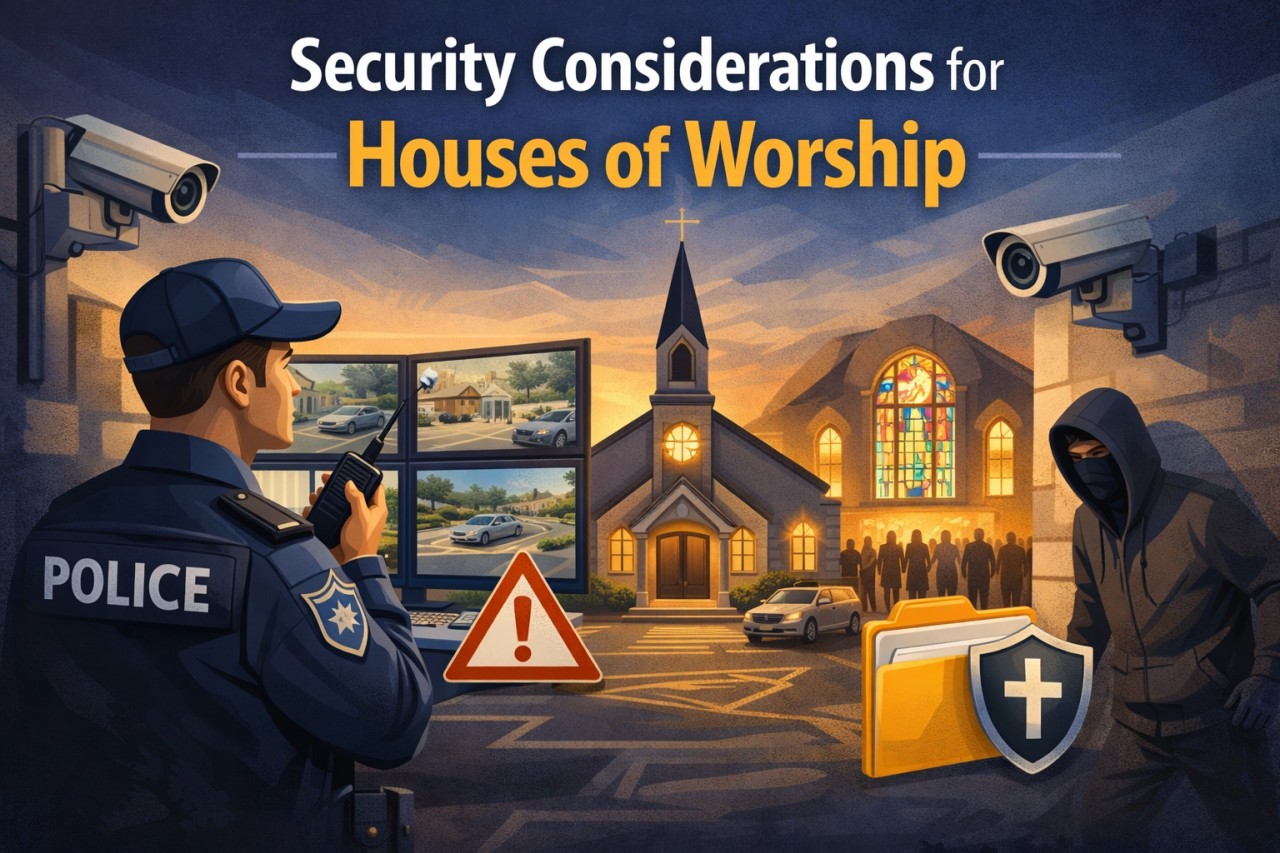
Houses of worship are places of peace, reflection, and community gathering. Churches, temples, mosques, synagogues, and other religious institutions are traditionally open and welcoming environments. While this openness is central to their mission, it can also present unique security challenges that require careful, respectful, and balanced planning.
In recent years, many religious organizations have recognized the importance of structured security planning—not to restrict access or disrupt worship, but to protect congregants, staff, volunteers, and property while maintaining the spiritual atmosphere of the space.
This article outlines the key security considerations for houses of worship, focusing on risk awareness, prevention, and professional security practices.
Understanding the Unique Nature of Worship Environments
Unlike commercial or residential properties, houses of worship typically:
- Welcome the public without prior registration
- Host gatherings of varying sizes
- Rely heavily on volunteers
- Operate during predictable schedules
These characteristics create security requirements that differ from traditional private properties. The goal of security in religious settings is not enforcement, but visibility, preparedness, and coordination.
Common Security Challenges for Houses of Worship
1. Open Access and Unrestricted Entry
Most houses of worship maintain open doors during services and community events. While this encourages inclusivity, it also increases exposure to risk.
Challenges include:
- Difficulty screening visitors
- Limited control over entry points
- Increased vulnerability during peak attendance
Security considerations:
- Monitoring main entrances during services
- Identifying secondary access points
- Maintaining awareness without disrupting worship
2. Large Gatherings and Crowd Management
Religious services, festivals, and special events can attract large crowds.
Potential risks:
- Overcrowding
- Medical emergencies
- Disruptive behavior
- Evacuation challenges
Security considerations:
- Trained personnel positioned discreetly
- Clear emergency exit access
- Coordination with staff and volunteers
3. Limited Security Training Among Volunteers
Many houses of worship rely on volunteers for operational support, including informal security roles.
Common limitations:
- Lack of formal training
- Inconsistent response to incidents
- Unclear authority boundaries
While volunteers play an essential role, reliance on untrained individuals for security-related responsibilities can create gaps.
Security considerations:
- Defined roles for volunteers
- Clear escalation procedures
- Professional oversight when needed
4. Threats Against Religious Institutions
Religious institutions may face risks due to:
- Vandalism
- Trespassing
- Harassment
- Targeted threats
While not all incidents are severe, even minor disruptions can impact congregant safety and peace of mind.
Security considerations:
- Awareness of surrounding activity
- Documentation and reporting of incidents
- Coordination with local authorities when appropriate
5. Protection of Vulnerable Populations
Houses of worship often serve:
- Children
- Elderly congregants
- Individuals with disabilities
Ensuring their safety requires additional awareness.
Security considerations:
- Monitoring children’s areas
- Assisting elderly attendees
- Managing access to restricted rooms
6. Emergency Preparedness and Response Planning
Emergency situations may include:
- Medical emergencies
- Fire or evacuation scenarios
- Suspicious activity
- Natural disasters
Without structured planning, response times may be delayed.
Security considerations:
- Emergency response plans
- Clear communication procedures
- Staff and volunteer awareness training
7. After-Hours and Property Security
Many houses of worship are unoccupied for extended periods.
Common after-hours risks:
- Vandalism
- Theft
- Unauthorized use of property
Security considerations:
- Perimeter checks
- Scheduled patrols
- Monitoring doors, windows, and lighting
Balancing Security With a Welcoming Environment
One of the most important considerations for houses of worship is maintaining a non-intrusive security presence.
Effective security in religious settings should:
- Be discreet and respectful
- Avoid intimidating congregants
- Support, not replace, community values
Professional security personnel are trained to blend into the environment while remaining alert and responsive.
Role of Professional Security Services in Houses of Worship
Professional security services can support religious institutions in a variety of ways without altering the character of worship spaces.
Access Monitoring
Security personnel can:
- Observe entry points during services
- Identify unusual behavior
- Assist with visitor flow management
Patrol and Visibility
Patrols help:
- Deter vandalism and trespassing
- Identify safety hazards
- Provide reassurance to congregants
Incident Observation and Reporting
Security guards are trained to:
- Document incidents objectively
- Follow escalation protocols
- Communicate with leadership when needed
De-escalation and Communication
Rather than enforcement, security personnel focus on:
- Calm verbal intervention
- Conflict avoidance
- Safe resolution of disturbances
Legal and Operational Limitations of Private Security
It is important for religious leaders and administrators to understand that private security guards are not law enforcement officers.
Key limitations include:
- No independent authority to enforce criminal law
- No investigative powers
- Must act within property rules and California regulations
Security services focus on prevention, observation, and coordination, not punishment.
Importance of Customized Security Planning
Every house of worship is different. Security planning should consider:
- Size of the congregation
- Frequency of events
- Building layout
- Surrounding neighborhood
- Cultural and religious practices
A one-size-fits-all approach often fails to address specific risks. Customized planning ensures security measures remain effective and appropriate.
Technology and Infrastructure Considerations
Security planning may also involve infrastructure elements such as:
- Lighting
- Cameras
- Alarm systems
- Controlled access areas
Technology should support, not replace, human presence and awareness.
Security considerations:
- Regular system checks
- Clear camera coverage
- Prompt reporting of equipment issues
Building a Culture of Awareness
Security is most effective when leadership, staff, volunteers, and congregants share responsibility.
Awareness efforts may include:
- Encouraging reporting of concerns
- Clear signage for exits and restricted areas
- Periodic safety reminders
A culture of awareness enhances safety without compromising the welcoming nature of worship spaces.
Conclusion
Houses of worship face unique security challenges due to their open, inclusive nature and diverse congregations. Addressing these challenges requires a balanced approach—one that respects spiritual values while recognizing practical safety needs.
Through thoughtful planning, professional security support, and community awareness, religious institutions can create environments that remain open and welcoming while prioritizing the safety of everyone who attends. Security, when implemented correctly, serves as a quiet layer of protection, supporting the mission of the institution without overshadowing it.