📩 info@irisprotectionservices.com 📲 (657) 214-0877 🏛️ Iris Protection Services, Inc 🛂 License No. PPO120833

Residential Security Challenges in Gated Communities
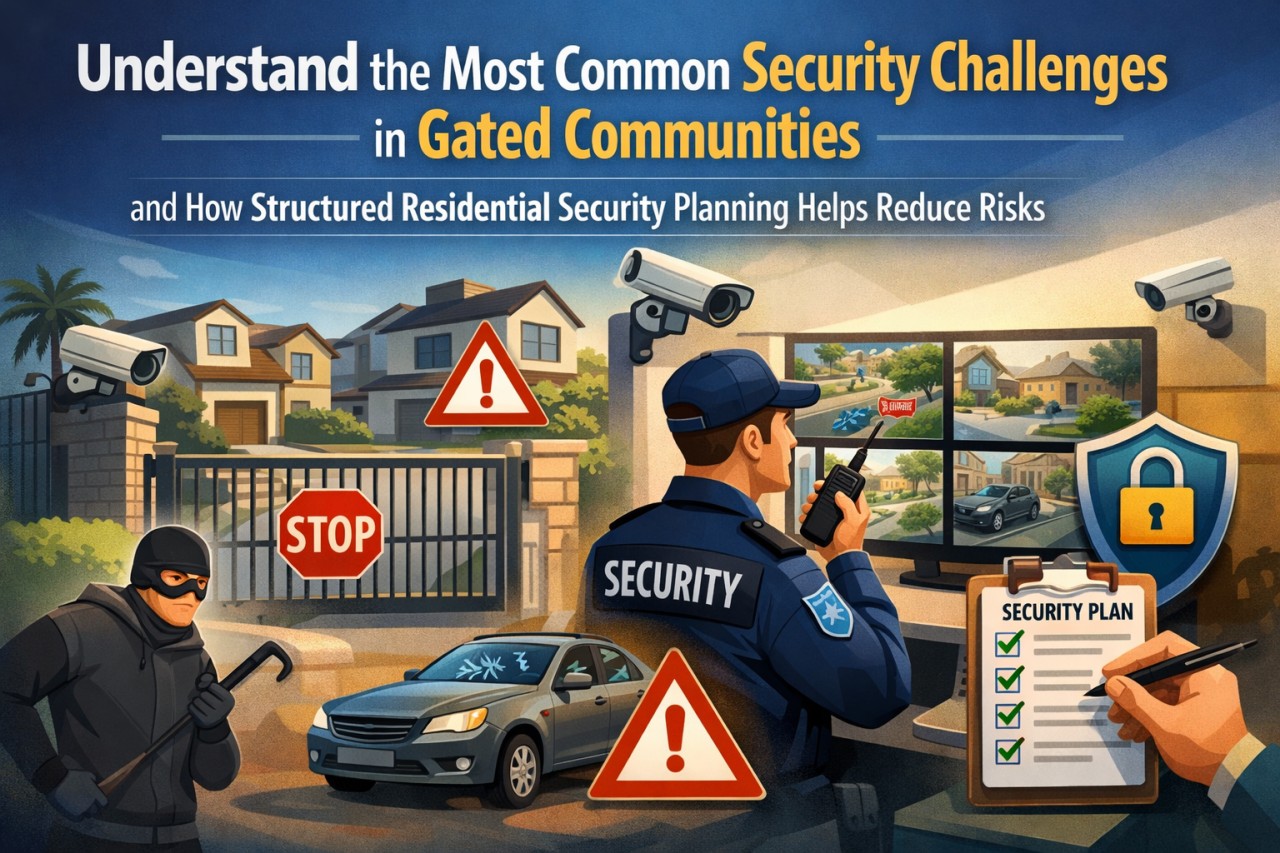
Gated communities are often perceived as inherently secure environments. Controlled entry points, perimeter fencing, and private roads can provide a strong first line of defense. However, experience across residential developments in California shows that gated communities face unique and evolving security challenges that require structured planning, trained personnel, and ongoing risk assessment.
This article examines the most common residential security challenges in gated communities, explains why they occur, and outlines professional security considerations used to manage these risks effectively.
Understanding Security Expectations in Gated Communities
Residents of gated communities typically expect:
- Controlled access to the property
- Reduced crime and unauthorized entry
- A sense of privacy and safety
- Professional handling of incidents
While gates and access controls can deter casual trespassers, they do not eliminate security risks. In some cases, the perception of safety can lead to relaxed vigilance, creating opportunities for security lapses.
Common Residential Security Challenges in Gated Communities
1. Unauthorized Access Through Tailgating
Tailgating occurs when an unauthorized individual enters a gated area by closely following a resident vehicle through an access-controlled gate.
Why it happens:
- Residents holding gates open for convenience
- Broken or poorly maintained gate systems
- Lack of monitoring at entry points
Risks involved:
- Entry of non-residents
- Increased theft or vandalism
- Difficulty tracking responsibility after incidents
Security considerations:
- Monitoring entry points
- Access verification procedures
- Resident awareness programs
2. Inadequate Visitor Management
Visitor access is one of the most complex security challenges in gated communities.
Common issues include:
- Unverified guest entries
- Incomplete visitor logs
- Delivery drivers gaining unrestricted access
- Vendors entering without scheduled authorization
Without a structured visitor management process, it becomes difficult to identify who is on the property at any given time.
Security considerations:
- Visitor logging and identification
- Verification with residents or property management
- Controlled delivery access protocols
3. Package Theft and Property Theft
Even in gated communities, package theft remains a frequent concern, especially with the rise of online shopping.
Common scenarios:
- Packages left unattended at doorsteps
- Unmonitored common areas
- Limited surveillance coverage
Security considerations:
- Patrol visibility during peak delivery hours
- Monitoring of shared areas
- Incident reporting and documentation
4. Limited Night-Time Visibility
Security risks often increase during nighttime hours due to reduced visibility and lower resident activity.
Common night-time challenges:
- Poorly lit pathways and parking areas
- Reduced gate supervision
- Delayed detection of suspicious activity
Security considerations:
- Scheduled patrols during night hours
- Monitoring of lighting deficiencies
- Clear reporting procedures for residents
5. Internal Threats and Familiarity Risks
One of the less discussed challenges in gated communities is internal risk—individuals who already have legitimate access.
This may include:
- Former residents
- Contractors with outdated access credentials
- Delivery personnel familiar with the layout
Because these individuals appear familiar, suspicious behavior can go unnoticed.
Security considerations:
- Regular access audits
- Credential updates and revocations
- Documentation of service personnel activity
6. Emergency Response Delays
In some gated communities, emergency responders may experience delays due to access restrictions.
Contributing factors:
- Locked or malfunctioning gates
- Lack of emergency access protocols
- Unclear address signage
Security considerations:
- Emergency access planning
- Clear communication with local responders
- Gate override procedures
7. Resident Compliance and Awareness Issues
Security measures are only effective when residents understand and follow established procedures.
Common challenges:
- Residents bypassing security protocols
- Sharing access codes
- Failure to report suspicious activity
Even well-designed security systems can be compromised through inconsistent compliance.
Security considerations:
- Resident orientation programs
- Clear community security policies
- Regular reminders and updates
Role of Professional Security Services in Gated Communities
Professional residential security services provide structure, accountability, and consistency in managing community safety.
Access Control Management
Security personnel can:
- Monitor entry and exit points
- Verify visitors and service providers
- Enforce access policies consistently
Mobile and Foot Patrols
Patrols help:
- Deter unauthorized activity
- Identify safety hazards
- Maintain a visible security presence
Incident Reporting and Documentation
Professional guards are trained to:
- Document incidents accurately
- Follow escalation protocols
- Coordinate with property management when needed
Conflict De-escalation
Security personnel often act as first responders to:
- Resident disputes
- Noise complaints
- Trespassing concerns
Their role emphasizes observation, communication, and reporting rather than law enforcement authority.
Legal and Operational Limitations of Residential Security
Residents and property managers need to understand that private security guards are not law enforcement officers.
Key limitations include:
- No authority to arrest beyond the citizen’s arrest laws
- No authority to enforce criminal law independently
- Must operate within California regulations and property policies
Professional security focuses on prevention, deterrence, and coordination, rather than enforcement.
Technology and Infrastructure Challenges
Many gated communities rely on aging infrastructure.
Common issues:
- Outdated access control systems
- Malfunctioning cameras
- Poor integration between systems
Security effectiveness depends on both personnel and technology working together.
Security considerations:
- Regular system audits
- Maintenance coordination
- Reporting technical failures promptly
Importance of Customized Security Planning
No two gated communities are identical. Factors that influence security needs include:
- Size of the community
- Number of entry points
- Resident demographics
- Location and crime patterns
A standardized approach often leaves gaps. Customized security planning allows communities to address specific vulnerabilities rather than relying on generic solutions.
Conclusion
Gated communities provide a strong foundation for residential security, but they are not immune to risk. Unauthorized access, visitor mismanagement, internal familiarity, and infrastructure limitations are common challenges that require consistent oversight.
By understanding these challenges and implementing structured security practices, gated communities can maintain safer living environments while respecting resident privacy and legal boundaries. Professional security services play a critical role in risk identification, deterrence, and response coordination, helping communities manage safety proactively rather than reactively.